Break the Tension: Fast Stress Relief Tools for Any Day

Break the Tension: Simple Stress Relief You Can Use Today
Stress can build quietly and then spike fast—at work, at home, or in the middle of a busy day. The most reliable relief usually comes from small, repeatable skills: breathing that downshifts the nervous system, short meditations that reset attention, grounding techniques that pull the mind out of spirals, and time management habits that prevent stress from stacking. The options below include quick tools for acute stress plus simple routines that support lasting resilience.
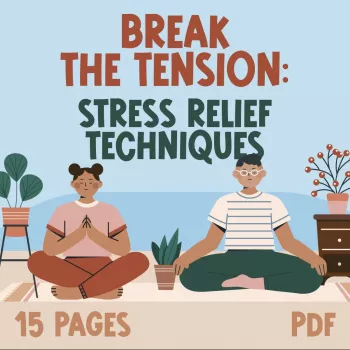
For a deeper, printable set of step-by-step techniques you can keep on your phone or desk, see Break the Tension: Stress Relief Techniques – Breathing Exercises, Quick Meditations, Grounding Techniques, and Time Management Tips to Reduce Stress.
Know the Two Types of Stress Moments: Spike vs. Stack
Not all stress is the same, and choosing the right tool is easier when you first identify what kind of moment you’re in.
- Stress spikes are sudden surges (an argument, a deadline, a scary email). These respond best to fast, body-based regulation.
- Stress stacks are ongoing overload (too many tasks, unclear priorities, weak boundaries). These improve most with systems and planning.
- Use a 10-second check: notice breath speed, jaw/shoulder tension, and racing thoughts to decide whether you need a calming “downshift” or a planning reset.
- Aim for “good enough relief” in the moment, then add one prevention habit later the same day.
Authoritative overviews on how stress affects the body and behavior are available from the American Psychological Association and the World Health Organization.
Breathing Exercises That Calm Fast (No Special Setup)
Breath control is one of the quickest ways to signal safety to your nervous system—especially when your thoughts are moving too fast to “reason” your way out. Harvard Health notes that breath control can help quiet an overactive stress response (source).
3 breathing options that work almost anywhere
- Physiological sigh (30–60 seconds): inhale through the nose, top up with a second short inhale, then take a long, slow exhale through the mouth. Repeat 3–5 times to reduce arousal quickly.
- Box breathing (2–4 minutes): inhale 4, hold 4, exhale 4, hold 4. Keep shoulders relaxed and exhale fully.
- Extended exhale breathing (2–5 minutes): inhale 4, exhale 6–8. Longer exhales tend to support a calmer baseline and reduce the sense of urgency.
- Discreet in meetings: breathe through the nose only, soften your gaze, and count silently to keep attention steady.
- Common mistake: forcing big inhales. Prioritize gentle breathing and smooth, complete exhales.
| Situation | Technique | How long | What to focus on |
|---|---|---|---|
| Heart racing or panic-y surge | Physiological sigh | 30–60 sec | Long exhale, unclench jaw |
| Irritability or agitation | Box breathing | 2–4 min | Even counts, still posture |
| Overwhelm and mental noise | Extended exhale (4 in / 6–8 out) | 2–5 min | Slow exhale, relaxed shoulders |
| Trouble falling asleep | Extended exhale (4 in / 8 out) | 5–10 min | Exhale all the way, heavy limbs |
Quick Meditations for a Reset (1–10 Minutes)
Meditation doesn’t need special music, a perfect mood, or a long session. A “reset” is simply training attention to return—again and again—without getting dragged by the story of the stress.
- One-minute anchor: pick one sensation (breath at the nostrils, feet on the floor, hands on thighs). Each time the mind wanders, return to the anchor.
- Three-minute “name it to tame it”: silently label what’s happening—“thinking,” “worrying,” “planning,” “tightness”—then return to the anchor without debating the thought.
- Five-minute body scan: move attention from forehead to jaw, neck, shoulders, chest, belly, and hands. On each exhale, soften one area by a small amount.
- Two-minute compassion reset: place a hand on your chest, inhale gently, exhale slowly, and repeat: “This is hard; may I be steady.”
- If it feels frustrating: shorten the time and choose one physical anchor. Consistency beats intensity.
Grounding Techniques to Stop Spirals and Re-Enter the Present
When stress turns into spiraling, grounding helps by giving your brain “real-time” sensory data. The goal isn’t to make feelings disappear; it’s to reduce escalation so you can choose your next step.
Time Management Tips That Reduce Stress at the Source
If family logistics and school responsibilities are a major source of stacking stress, a structured routine can help: Homework Help Made Easy Toolkit for Parents – Printable Guide for Creating Study Habits, Homework Strategies & Independent Learning.
A Simple “Break the Tension” Daily Routine (Morning, Midday, Evening)
When to Get Extra Support
FAQ
What is the fastest breathing technique to calm down?
The physiological sigh is one of the quickest options: inhale through your nose, take a second short “top-up” inhale, then exhale long and gently through your mouth. Do 3–5 rounds and focus on relaxing your jaw as you extend the exhale.
How long should a quick meditation be to actually help?
Even 1–3 minutes can help in the moment by resetting attention and reducing mental noise. If you can, 5–10 minutes often creates a deeper reset—stick with one simple anchor and return to it each time you wander.
What can be done when stress comes from too many tasks?
Pick one must-do for the day, convert vague items into a clear next action, and time-box email/admin so it doesn’t expand endlessly. Add short buffers between blocks and do an end-of-day capture (what’s done, what’s next) to reduce nighttime rumination.










Leave a comment