Minimalist Travel Packing Planner: Pack Light Every Time
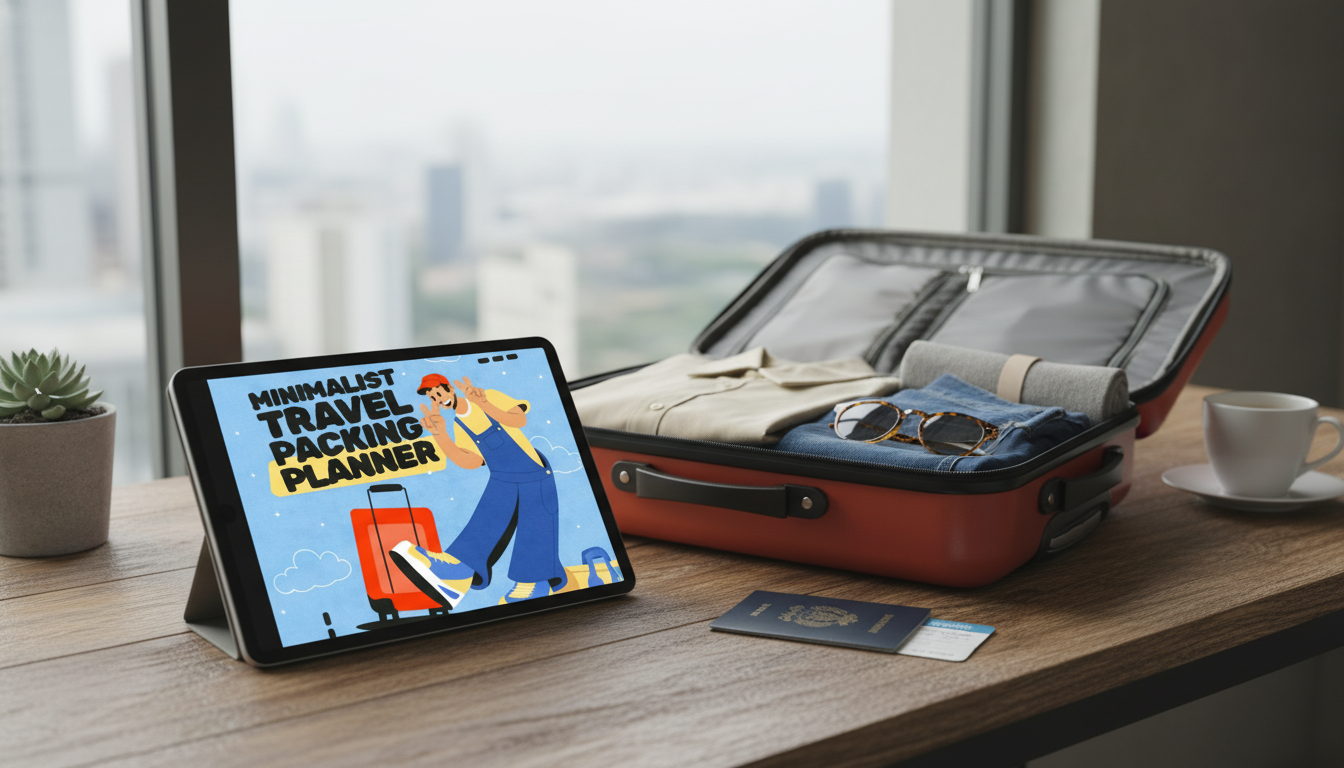
Minimalist Travel Packing, Without the Guesswork
Packing light gets easier when decisions are made before the suitcase opens. A minimalist packing system reduces last-minute scrambling, prevents overpacking, and keeps essentials consistent across weekend getaways, business travel, and longer trips. A digital planner makes the process repeatable—so each trip starts with a proven list, not a blank page.
If you want a structured, editable system you can reuse, the Minimalist Travel Packing Planner | Digital Packing Guide for Light, Smart & Stress-Free Trips is built to help you decide what to bring, what to skip, and how to stay organized from pre-trip prep to the return-home reset.
What “minimalist packing” actually means on real trips
Minimalist packing isn’t about deprivation or traveling with one outfit. It’s about removing low-probability “what if” items and doubling down on versatile pieces you’ll actually wear and use.
- Pack for activities, weather, and laundry access—not for every possible scenario.
- Build a small, repeatable core wardrobe and adjust with 2–3 trip-specific items.
- Use limits that are easy to remember (for example: one pair of walking shoes, one nicer outfit, one layer system).
- Prioritize comfort, versatility, and items that work together as outfits.
- Aim for fewer categories and fewer duplicates instead of smaller versions of everything.
How a digital packing planner reduces stress before departure
The easiest way to pack lighter is to pack with a system. A digital packing planner turns “packing” into a sequence you can follow—especially when time is tight.
- Turns packing into a checklist flow: decide → gather → confirm → pack.
- Captures “always-pack” essentials (IDs, chargers, meds) so nothing gets forgotten.
- Allows quick reuse for future trips by duplicating and tweaking a proven list.
- Helps avoid overpacking by making trade-offs visible (add one item, remove one).
- Creates a clear last-24-hours plan: laundry, downloads, documents, home tasks.
For air travel, it also helps to confirm liquid and carry-on rules ahead of time using authoritative guidance like the Transportation Security Administration (TSA) — What Can I Bring? page.
A simple workflow: from trip details to zipped bag
Use this five-step workflow to go from “trip idea” to “everything packed” without piling extras on the bed.
Step 1: Define trip basics
Write down dates, destination climate, planned activities, dress code, and baggage rules. For international trips, it helps to double-check entry and document requirements via the U.S. Department of State — International Travel guidance.
Step 2: Choose a capsule wardrobe
Pick a simple color palette, then choose 2–3 bottoms that match every top. The goal is outfit math: each top should work with each bottom.
Step 3: Set quantity caps
Cap outfits per day, underwear/socks, and layers, plus one backup option. If you’re packing more “just because,” that’s usually the first sign the caps are too loose.
Step 4: Lock essentials
Documents, health items, tech, and security basics come next. These should be consistent across nearly every trip.
Step 5: Pack by zones (then remove 10%)
Pack by zones—clothes, toiletries, tech, day bag—then do one final pass: remove about 10% by cutting duplicates and “maybe” items.
Packing list by trip type (use as a starting point)
- Weekend city break: focus on one pair of versatile shoes and one “nice enough” outfit.
- Business trip: prioritize wrinkle-resistant pieces and a dedicated tech/documents kit.
- Beach/warm weather: limit bulky items; bring one main cover-up and a compact sun/skin kit.
- Cold weather: rely on layers; keep outerwear and one warm shoe as the bulky anchors.
- One-bag travel: reduce duplicates; plan laundry and quick-dry fabrics.
Minimalist quantity guide (adjust for laundry access)
| Trip length | Tops | Bottoms | Shoes | Outer layers | Notes |
|---|---|---|---|---|---|
| 2–3 days | 2–3 | 1–2 | 1–2 | 1 | One outfit can be worn twice if fabrics stay fresh |
| 4–6 days | 3–5 | 2–3 | 2 | 1–2 | Plan one “reset” (laundry sink-wash or quick wash) |
| 7–10 days | 5–7 | 3–4 | 2 | 2 | Laundry once keeps the list small and consistent |
Light packing without forgetting essentials: the non-negotiables
- Documents: ID/passport, tickets/confirmations, backup payment method, travel insurance details if applicable.
- Health: prescriptions, basic first-aid, any critical medical info, hydration support for long travel days. For destination-specific considerations, check CDC — Travelers’ Health.
- Tech: phone + charger, power bank, adapters (only if needed), headphones, a small cable organizer.
- Security: luggage lock (if useful), discreet money storage, and digital backups of key documents.
- Comfort: one sleep aid item, a layer for cold planes, and an easy snack for delays.
Common overpacking traps (and clean alternatives)
Using the Minimalist Travel Packing Planner as a reusable system
To make the system plug-and-play, start with Minimalist Travel Packing Planner | Digital Packing Guide for Light, Smart & Stress-Free Trips and duplicate your favorite list for each new departure.
When a digital planner is especially helpful
More practical toolkits available
- Homework Help Made Easy Toolkit for Parents – Printable Guide for Creating Study Habits, Homework Strategies & Independent Learning
- Afro Styling Comb for Natural Curly Hair & Real Hair Wigs
- Straight Hair V-Comb Styling Brush for Smooth, Sleek Results
FAQ
How far in advance should packing be planned for a stress-free trip?
Use a 3-stage timeline: 5–7 days out to decide outfits and essentials, 2–3 days out to gather items and do laundry, and the last day for final checks like documents, charging, and downloads.
What’s the easiest way to avoid overpacking clothes?
Stick to a capsule wardrobe: choose a small color palette, set caps for tops and bottoms, and make sure each added item replaces something else rather than “joining the pile.”
Can a minimalist packing plan work for longer trips?
Yes—longer trips rely on laundry and repeatable outfits. Keep quantities stable, plan one wash day, and prioritize quick-dry fabrics so you don’t need to scale your packing list with trip length.











Leave a comment