Talk & Connect: Parent-Child Conversation Starters

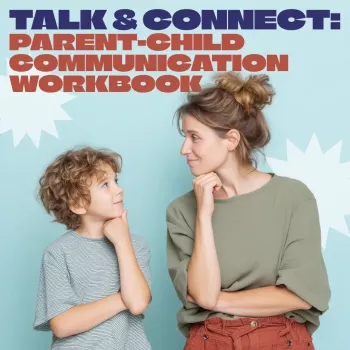
Talk & Connect: A Parent-Child Communication Workbook for Stronger Bonds
Busy schedules, big feelings, and growing independence can make daily conversations feel rushed or tense. Talk & Connect: Parent-Child Communication Workbook is designed for real family life: short emotional check-ins, guided conversation starters, and simple activities that help parents and kids communicate with more warmth, clarity, and consistency—without turning every talk into a “big talk.”
When communication gets easier, behavior often improves too. Kids feel understood, parents feel less reactive, and everyday moments (car rides, bedtime, after school) become chances to reconnect instead of repeat the same argument.
What This Workbook Helps Families Do
- Turn short, surface-level chats into meaningful connection without forcing long talks.
- Build emotional vocabulary so kids can name feelings instead of acting them out.
- Create predictable moments for connection (car rides, bedtime, after school, weekends).
- Reduce power struggles by focusing on understanding before problem-solving.
- Support repair after conflict with calm, step-by-step reflection prompts.
These skills align with widely recommended parenting approaches that emphasize connection, clear expectations, and emotional coaching. For additional guidance from trusted organizations, explore resources from American Academy of Pediatrics (HealthyChildren.org) and the American Psychological Association on resilience.
Who It’s For (And When It’s Most Useful)
- Parents who want more cooperation and fewer repeat arguments.
- Families navigating transitions: new school year, moves, divorce/separation, new sibling, grief.
- Kids who shut down, answer with “fine,” or struggle to talk about feelings.
- Parents who feel stuck between being too strict and too permissive.
- Caregivers looking for structured conversation starters that don’t feel scripted.
It’s also a steadying tool during “in-between” phases—when nothing is officially wrong, but everyone feels a little disconnected. The point isn’t perfect communication; it’s creating enough safety and consistency that honesty becomes easier over time.
A Simple Weekly Routine for Better Conversations
Consistency beats intensity. A few minutes, repeated often, has a bigger impact than occasional deep dives—especially for kids who get overwhelmed by direct questions.
- Daily: 3–5 minute emotional check-in (name a feeling + one reason).
- 2–3 times per week: one guided prompt to learn about your child’s inner world (friends, worries, wins).
- Weekly: a “repair and reset” moment to revisit conflicts with calmer brains.
- Monthly: a family goals page (pick one small habit to practice together).
- Keep it short: end conversations on connection, not on a lecture.
Quick conversation ideas by moment of the day
| Moment | Try this prompt | Why it works |
|---|---|---|
| After school | “What was the hardest part of your day?” | Invites honesty without demanding a full recap |
| Dinner | “Tell me one thing you learned about someone today.” | Builds empathy and social awareness |
| Bedtime | “What do you want to remember from today?” | Ends the day with reflection and safety |
| In the car | “If your mood had a color right now, what would it be?” | Makes feelings easier to share for kids who avoid direct emotion talk |
| After conflict | “What do you need from me next time?” | Focuses on repair and future skills, not blame |
Conversation Starters That Create Emotional Connection
- Use open questions that don’t have a “right” answer (stories, choices, feelings, values).
- Choose curiosity over correction: reflect back what you heard before responding.
- Mix light and deep prompts to keep conversations enjoyable and sustainable.
- Normalize mixed feelings: “Two things can be true at the same time.”
- Follow up gently: one supportive question is often better than five rapid-fire questions.
A helpful rhythm is: ask one question, listen fully, summarize in one sentence, then ask one “go-on” question. Kids notice when listening is real—and when it’s just a lead-in to a speech.
Positive Parenting Skills the Workbook Reinforces
- Emotion coaching: naming feelings, validating, and guiding toward coping skills.
- Active listening: summaries, clarifying questions, and calm tone matching.
- Healthy boundaries: clear expectations paired with empathy.
- Repair skills: apologizing, rebuilding trust, and planning for next time.
- Problem-solving together: brainstorming options and choosing a small next step.
These are learnable skills. The workbook format helps because it provides structure when emotions run high—so you’re not trying to invent the “right words” mid-conflict.
Using It in Real Life: Common Challenges and Easy Fixes
- If a child refuses to talk: start with a low-pressure prompt (“Choose one: bored, tired, excited”).
- If conversations escalate: pause and name the moment (“We’re getting heated—let’s reset”).
- If time is limited: pick one prompt and stop after the first meaningful answer.
- If siblings compete for attention: do short 1:1 check-ins on rotating days.
- If you miss days: restart without catching up; consistency matters more than perfection.
Pairing Communication with Learning Routines (When Homework Sparks Conflict)
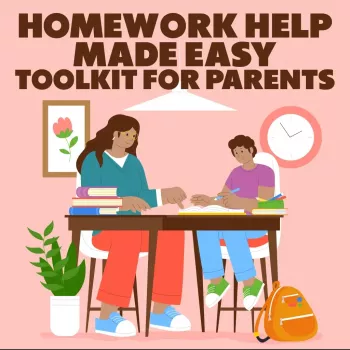
For families who want a practical system alongside better conversations, pair the workbook with the Homework Help Made Easy Toolkit for Parents—so the plan isn’t just “try harder,” but a repeatable routine everyone can follow.
Recommended Resources
- Talk & Connect: Parent-Child Communication Workbook (digital workbook)
- Homework Help Made Easy Toolkit for Parents (printable routines and study strategies)
FAQ
What age is this communication workbook best for?
It’s typically most useful for elementary-age kids through early teens. For younger kids, prompts can be simplified into choices (two feelings, two options), while older kids can use the same pages for deeper reflection and more independence in problem-solving.
How long should a daily check-in take to be effective?
About 3–10 minutes is enough when it happens consistently. A simple format is: one feeling, one highlight, and one need (or one small worry) before moving on with the day.
What if my child only answers with “I don’t know” or “fine”?
Offer gentle choices (“more tired or more annoyed?”), use playful indirect prompts (colors, 1–10 scales, would-you-rather), and reflect what you observe without pushing. Keeping the tone light and pressure-free makes real answers more likely over time.










Leave a comment