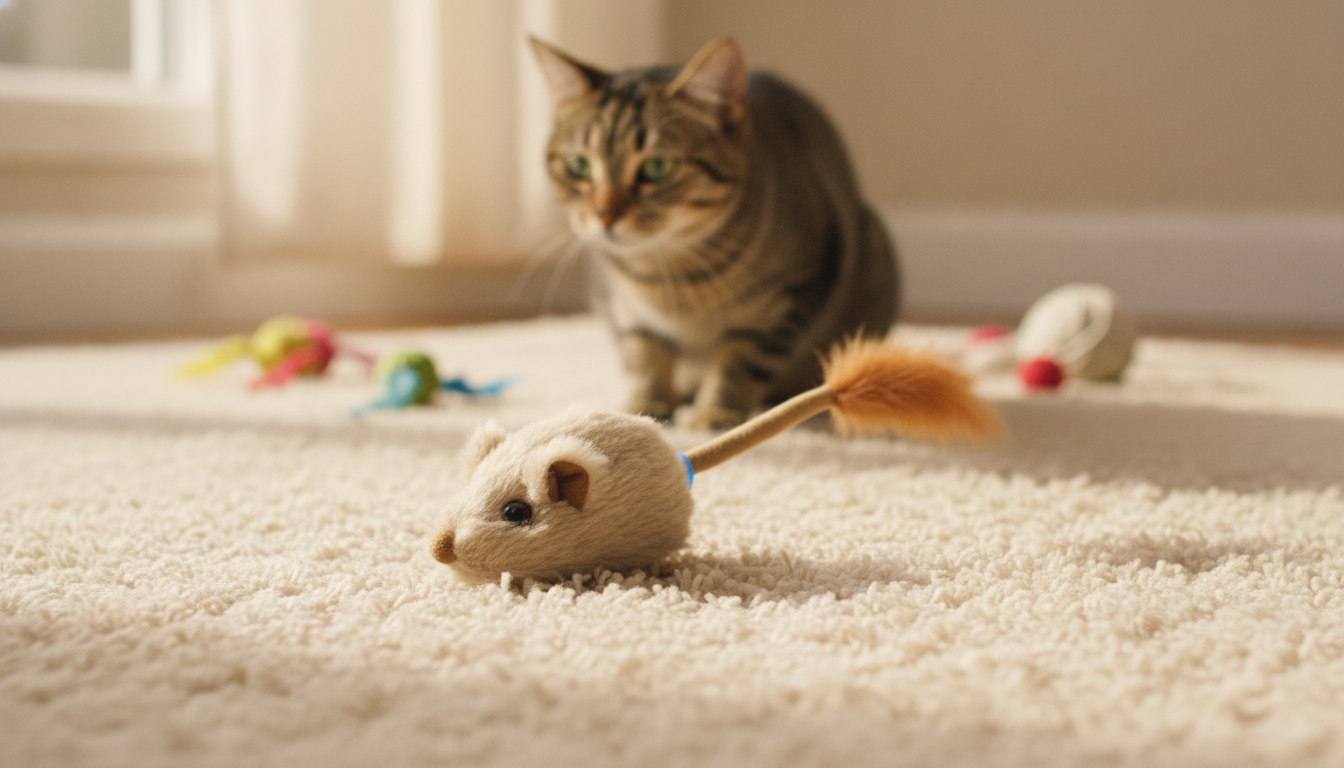
Cats thrive on short bursts of stalking, chasing, and pouncing. A moving mouse toy that adds sound and a wagging tail can keep play sessions exciting, encourage daily activity, and provide an engaging outlet for natural hunting instincts—especially for indoor cats. If your cat tends to lose interest in static plush toys, a self-moving “prey” toy can bring back that focused, wide-eyed hunting mode in seconds.
Many cats are hardwired to respond to quick, unpredictable motion. A moving mouse toy doesn’t just roll around—it creates tiny “escape” moments that invite your cat to track, chase, and re-engage.
For a deeper look at what cats need in their environment, the American Association of Feline Practitioners (AAFP) highlights how enrichment supports natural behaviors, and the ASPCA shares practical ideas for daily cat enrichment routines.
A rechargeable design helps reduce disposable battery waste and keeps the toy ready for frequent play. Combined with interactive motion, sound, and tail movement, it offers variety for cats that ignore simpler toys.
| Feature | What it means for your cat |
|---|---|
| Rechargeable power | More consistent playtime and fewer battery swaps |
| Self-moving mouse action | Encourages chasing, stalking, and pouncing |
| Sound effects | Adds novelty and can re-engage distracted cats |
| Wagging tail motion | Prey-like movement that invites swats and grabs |
| Indoor play focus | Helps support daily activity in smaller spaces |
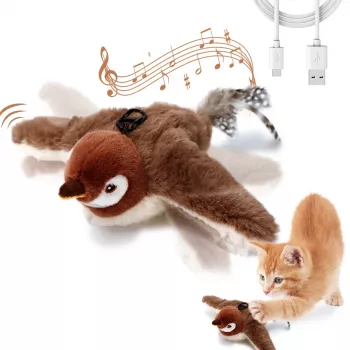
If you’re shopping for a feature-packed option, the Rechargeable Interactive Moving Mouse Cat Toy with Sound & Wagging Tail is designed to keep playtime dynamic without constant setup.
Some cats prefer “ambush” games more than open-floor sprinting. If that’s your cat, use furniture edges or a cardboard box to create peek-and-pounce angles so the mouse becomes something to stalk, not just chase.
A helpful rhythm is two short bursts rather than one long marathon. Many cats stay more engaged with 5–10 minutes of action, a short pause, and a second round later.
For easy “toy rotation,” a dedicated bin helps keep items fresh. A simple option is the Large Capacity Non-Woven Clothes & Quilt Storage Bag Organizer, which can double as a lightweight storage solution for pet toys, blankets, and refill treats.
If your cat tends to “kill-carry” toys, that’s normal. The key is making sure the toy stays intact and the play style stays safe.
It’s safest to supervise at first, then continue with routine checks for wear or loose parts. For heavy chewers or multi-cat homes, put the toy away between sessions to prevent chewing, guarding, or conflicts.
Start with short sessions from a distance and let your cat approach on their own terms. Pair calm curiosity with a treat, and pause sound-triggering play if you notice stress signals like crouching, hiding, or ears pinned back.
Most cats do well with 1–2 short daily sessions (about 5–15 minutes), adjusted for age and energy level. End while your cat is still interested, then offer a small snack to help complete the “hunt” cycle.












Leave a comment