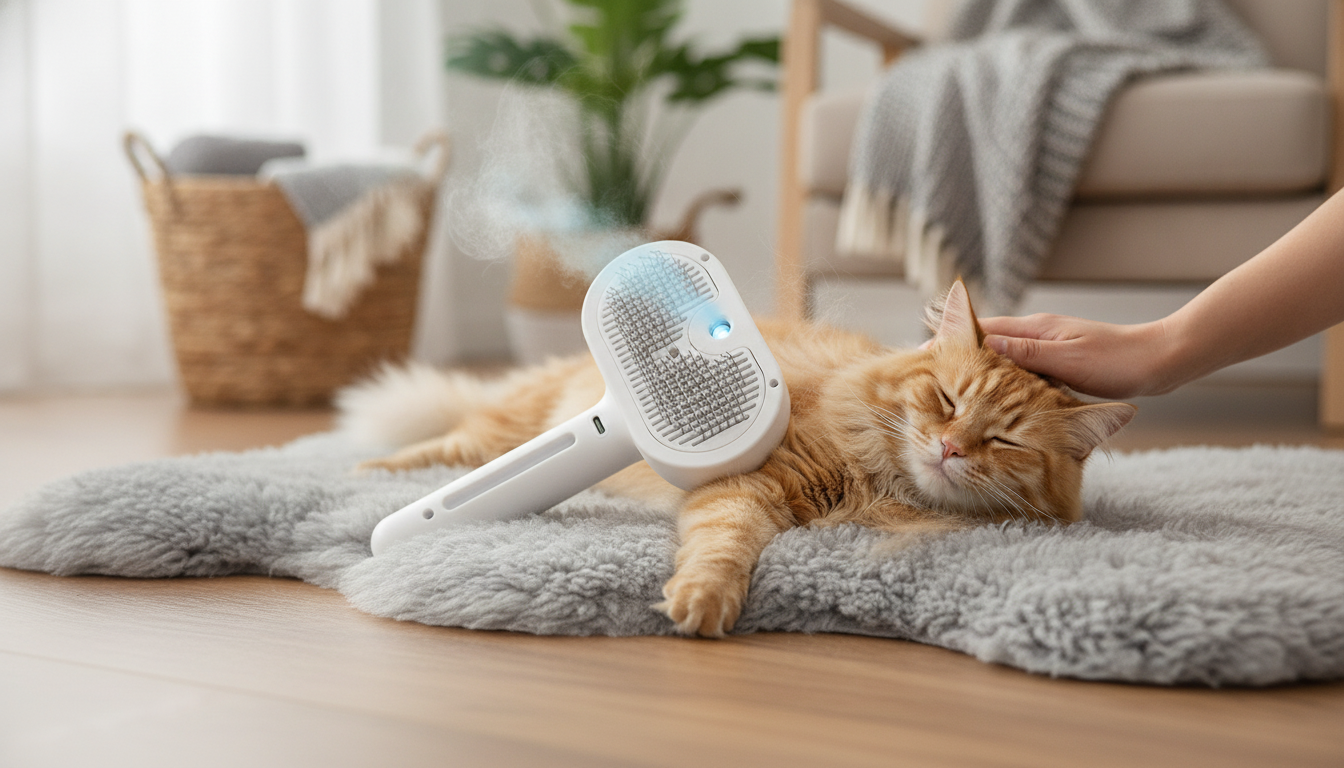
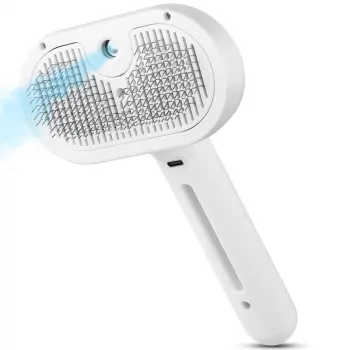
A steam-assisted grooming brush can make shedding seasons and everyday coat care easier by helping loosen debris, reduce static, and keep pets more comfortable during brushing. With a gentle mist-like effect and comb-style teeth, it’s built for routine maintenance: quick touch-ups, light detangling, and calming, massage-style strokes that many pets tolerate better than sharper tools. Below is a practical guide to what this type of brush does best, when it’s the right choice, and how to use it safely as part of a simple at-home grooming routine.
A steam comb brush combines familiar grooming actions—brushing, light combing, and coat-smoothing—into one compact tool. Used correctly, it can help keep fur looking neater between baths and reduce the “hair tumbleweed” effect around the home.
| Grooming need | What the steam + comb action can do | Best practice |
|---|---|---|
| Static and flyaway fur | Adds light moisture so fur lies flatter and is easier to guide | Use short strokes; avoid over-wetting the coat |
| Loose hair on topcoat | Lifts and gathers shed hair before it spreads around the home | Brush in the direction of coat growth; empty hair frequently |
| Light tangles | Helps separate strands so combing feels smoother | Start at the ends and work toward the base; stop if the pet shows discomfort |
| Sensitive pets that dislike pulling | Massage-like pressure can feel less sharp than a traditional slicker | Use minimal pressure and keep sessions brief at first |
| Dust and everyday debris | Moisture helps particles cling to the brush instead of floating off | Wipe the brush clean between passes; finish with a dry stroke if needed |
Steam comb brushes shine when used as a consistent, low-stress maintenance tool. They’re especially helpful when the coat is mostly manageable, but everyday buildup and loose hair make the pet look untidy.
For foundational brushing technique and pet-safe handling, it can help to compare guidance from reputable animal-care organizations such as the American Kennel Club (AKC) brushing guide and the ASPCA cat grooming overview.
A gentle tool can still cause discomfort if it’s rushed, pressed too hard, or used on sensitive areas. The goal is to keep sessions calm, brief, and predictable—especially for pets that are new to grooming.
If you notice persistent itching, hot spots, significant dandruff, or sudden coat changes, it’s wise to reference general pet-care guidance from the American Veterinary Medical Association (AVMA) and contact a veterinarian for individualized advice.
| Item | Price | Availability |
|---|---|---|
| Electric Pet Steam Comb & Massage Grooming Brush | $4.97 | In stock |
Yes for many cats and dogs, as long as the pet tolerates brushing. Introduce it gradually, use light pressure, and avoid the face and ears. Skip use on irritated skin or severe mats.
Most pets do well with short sessions 2–4 times per week, with more frequent brushing during heavy shedding. Stop if your pet shows stress signals or if the skin becomes red or irritated.
Light steam or mist can be safe when kept away from the eyes, nose, mouth, inside ears, and any sensitive or broken skin. Use minimal moisture, monitor the coat and skin during brushing, and discontinue if irritation appears.











Leave a comment