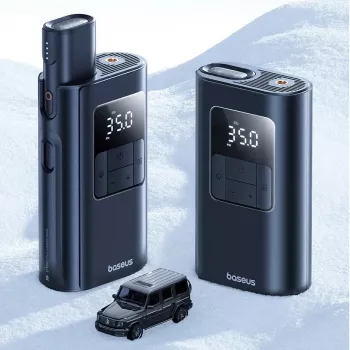
A flat tire, a low-pressure warning, or a late-night parking-lot problem can turn a normal drive into a stressful delay. A compact 2-in-1 inflator that also works as a power bank and flashlight helps cover the most common “stuck on the road” needs: restoring tire pressure, charging a phone, and seeing what’s going on when lighting is poor.
Portable tire inflators have moved from “nice to have” to “why didn’t I buy this sooner,” especially for drivers who deal with temperature swings, slow leaks, or long commutes. The biggest advantage is control: instead of searching for a working gas-station pump (or waiting in line), you can correct pressure right where you are.
Proper tire pressure also matters for everyday safety and efficiency. For background on why inflation levels matter, see guidance from NHTSA — Tire Safety and U.S. Department of Energy — Maintaining Proper Tire Pressure.
Not all compact inflators feel the same in real-world use. A few practical features can make the difference between a tool you trust and one you avoid pulling out.
| Feature | Why it matters | Practical tip |
|---|---|---|
| Auto-stop | Helps hit a target pressure consistently | Set the desired PSI, start inflating, then verify with a trusted gauge if available |
| Digital display | Easier to read at night and more precise than analog dials | Look for a screen that remains visible under flashlight glare |
| Battery + USB charging | Works away from the car and can be topped up at home | Recharge monthly so it’s ready when needed |
| Power bank output | Keeps phone powered for calls and navigation | Carry a short charging cable in the same pouch |
| Integrated flashlight | Improves safety and visibility after dark | Use strobe only when parked safely and you need attention |
| Nozzle/adapter set | Adds flexibility for bikes, balls, and inflatables | Store adapters in a small zip bag to prevent loss |
Getting good results is mostly about doing the basics consistently. A few small habits can improve accuracy and reduce wear on the compressor.
For additional tire maintenance basics, AAA — Tire Maintenance and Safety Tips offers a straightforward overview.
Many portable units can inflate from low pressure, but results depend on the tire size, the inflator’s airflow, battery level, and duty-cycle limits. In many real roadside situations, the practical goal is topping up to a safer pressure so you can drive carefully to a repair shop—avoid driving on a severely deflated tire.
Digital readings are convenient and usually close, but they can vary from a dedicated gauge. For best consistency, confirm occasionally with a separate quality tire gauge, especially before long trips or when tracking a suspected slow leak.
Park as far from traffic as you can, turn on hazard lights, and use the flashlight to check the valve stem and tire surface without putting yourself in an unsafe position. Keep your phone charging so you can call for help, share your location, or access insurance details if the situation changes.










Leave a comment