Guided Audio for Self-Worth: Calm, Confidence, Healing
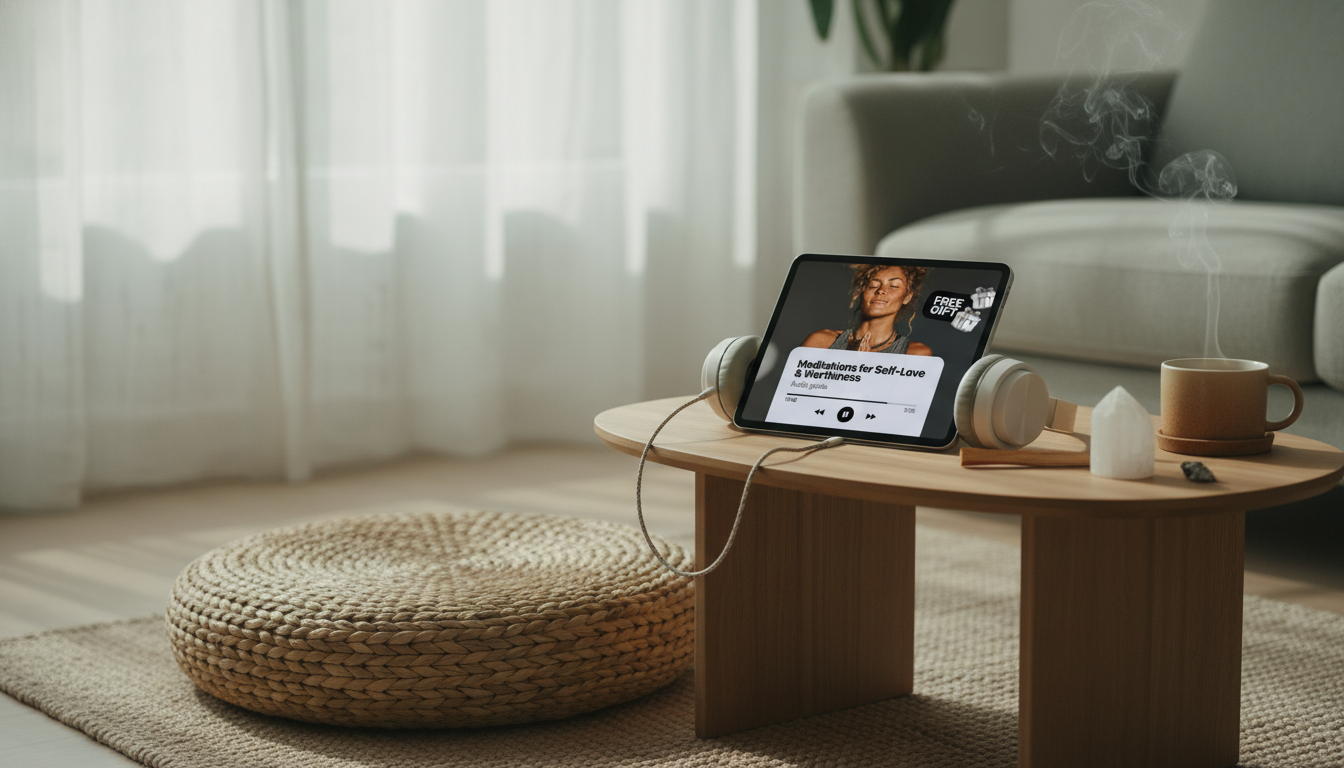
Feeling “Not Enough”? A Voice-Led Practice Can Help You Come Home to Yourself
Feeling “not enough” doesn’t always look dramatic. More often, it shows up as overthinking a simple text, shrinking your needs to keep the peace, replaying mistakes, or chasing productivity to prove you deserve rest. Over time, those patterns can train the mind and body to stay braced—waiting for criticism, rejection, or the next thing to fix.
Guided audio meditations for self-love and worthiness offer a practical way to retrain attention and soften the inner critic. With supportive pacing, mindfulness cues, and gentle affirmations, listening becomes a repeatable ritual—one that meets real life where it is: busy, emotional, and sometimes low on motivation.
Why worthiness work can feel so hard (and why audio helps)
Worthiness wounds are often shaped by repetition: criticism, comparison, neglect, invalidation, or chronic stress. When those experiences happen repeatedly, the nervous system can learn to stay guarded, and the mind may default to scanning for what’s wrong—especially with yourself.
Self-love isn’t constant positivity or pretending everything is fine. It’s a steady pattern of returning to care, boundaries, and self-respect—particularly after you’ve been triggered or thrown off center.
Audio helps because it reduces decision fatigue. Instead of having to “do meditation correctly,” you’re guided by a clear voice and structure. Repetition also builds familiarity, which can create a sense of safety and reduce emotional reactivity over time. And if silent meditation tends to amplify racing thoughts, a voice-led practice gives your attention something supportive to hold onto.
What this audio course supports
- Confidence: practicing compassionate self-talk and stable attention instead of chasing approval.
- Calm: using breath, body awareness, and grounding to settle the stress response.
- Inner healing: meeting painful emotions with gentle presence rather than avoidance or self-judgment.
- Consistency: short, repeatable sessions that can become a daily reset.
- Mindfulness skills: noticing thoughts as thoughts, not as facts about identity or worth.
For a deeper look at how mindfulness supports stress resilience, see the American Psychological Association overview on mindfulness meditation and the NCCIH guide to meditation and mindfulness effectiveness and safety.
Guided meditations, affirmations, and mindfulness—how they work together
Each tool supports a different layer of the worthiness puzzle:
- Guided meditation: directs attention (breath, body, imagery) to create safety and reduce mental spirals.
- Affirmations: plant alternative statements to the inner critic; they tend to work best when paired with a felt sense (breath + body), not forced positivity.
- Mindfulness: builds the skill of observing urges, shame loops, and comparison without immediately reacting.
Together, they form a practical loop: regulate the body → soften self-judgment → reinforce new beliefs → repeat. If you’d like research-based self-compassion exercises and frameworks, Kristin Neff’s work is a widely referenced resource at self-compassion.org.
Common audio track styles and when to use them
| Practice style | Best for | Example focus | When to press play |
|---|---|---|---|
| Grounding meditation | Anxiety, overwhelm, feeling scattered | Breath + body scan + sensory cues | Before work, after conflict, during busy afternoons |
| Self-love compassion practice | Harsh self-talk, shame, guilt | Kindness phrases, hand-on-heart, gentle imagery | After mistakes, social stress, negative self-comparison |
| Worthiness affirmations | People-pleasing, perfectionism, fear of rejection | Belonging, enoughness, boundaries | Before difficult conversations, morning routine |
| Inner healing visualization | Old emotional pain, grief, unmet needs | Safe place, inner child comfort, releasing tension | Evenings, weekends, therapy support days |
A simple 10-minute “worthiness reset” routine
When you’re caught in self-criticism or approval-seeking, it helps to keep the practice small and doable. Here’s a 10-minute reset you can repeat with a guided track or on your own:
- Minute 1–2: Arrive. Feel your feet on the floor, lengthen the exhale, unclench jaw and shoulders.
- Minute 3–6: Regulate. Slow breathing or a brief body scan to reduce the urge to fix, prove, or perform.
- Minute 7–9: Reframe. Use a small set of believable phrases (example: “I can be kind to myself in this moment”).
- Minute 10: Anchor. Choose one supportive action (water, short walk, boundary, message to a friend, tidy one surface).
If emotion spikes, keep eyes open, name five things you can see, and return attention to physical contact points (feet, hands, back against the chair). This keeps the practice connected to the present instead of getting pulled into old stories.
How to get the most from the course (without forcing it)
Who this is for (and when to add extra support)
Shop: Guided support for confidence, calm, and daily structure
- Meditations for Self-Love & Worthiness | Audio Course | Guided Meditations, Affirmations & Mindfulness for Confidence, Calm, and Inner Healing ($26.99)
- Homework Help Made Easy Toolkit for Parents – Printable Guide for Creating Study Habits, Homework Strategies & Independent Learning ($7.99)
FAQ
How often should guided self-love meditations be practiced to notice a change?
A consistent 5–10 minutes daily for 2–4 weeks is a practical starting point. Repeating the same track can help you notice subtler shifts, like reduced self-criticism and faster calming after stress.
Do affirmations work if they don’t feel true yet?
They can, especially when you use believable “bridge” statements and pair them with breath and body awareness. The goal is gradual rewiring through repetition, not forcing words that feel fake or triggering.
Can mindfulness and guided meditation help with anxiety and overthinking?
Yes—mindfulness skills can reduce stress reactivity and rumination by training you to notice thoughts without automatically following them. If anxiety feels severe, persistent, or unmanageable, adding professional support can be an important next step.










Leave a comment