Low-Risk Side Hustle Launch: MVP, Pricing, First Sales

Side Hustle Launch & Monetization Guide: A Low-Risk Playbook for MVP, Pricing, Funnels, and First Customers
A low-risk side hustle becomes real when it has a clear problem, a simple offer, and a repeatable way to get paid. The goal isn’t to build a “perfect business”—it’s to validate demand fast, deliver a measurable result, and create a small system you can run alongside a job, school, or family life.
If you want a ready-to-use framework with checklists, examples, and first-customer scripts, start here: Side Hustle Launch & Monetization Guide – Low-Risk Startup Playbook with The MVP Strategy, Building a Simple Sales Funnel, Pricing, and First Customer Tactics.
Start with a low-risk side hustle thesis
A “thesis” keeps you from chasing random ideas. It’s a short statement about who you help, what outcome you create, and how you’ll deliver it with minimal time and risk.
- Define the outcome the customer wants. Outcomes sell: time saved, money earned, stress reduced, convenience increased, confidence gained.
- Choose a narrow customer segment you can actually reach. Pick a specific job role, hobby group, neighborhood, or platform community where you can show up consistently.
- Pick a delivery method that fits limited time. Digital download, consulting call, simple service package, or productized done-for-you work beats anything that needs daily custom support.
- Set constraints up front. Decide your budget cap, weekly hours, and a 30-day validation timeline so the project doesn’t sprawl.
Example thesis: “Help first-time Etsy sellers create a shop-ready product listing pack in 72 hours, without spending weeks learning design tools.”
Validate demand before building
Validation isn’t a logo, a website, or a long checklist. Validation is evidence that real people want the result—and will take the next step toward paying for it.
- Write a one-sentence promise. “Help [specific person] get [specific result] without [common pain].” If you can’t say it cleanly, the offer is probably too broad.
- Collect fast proof. Have short conversations, run a quick poll, open a waitlist, or offer paid discovery calls.
- Look for “pull” signals. People ask follow-up questions, request pricing, or try to book time. “Sounds cool” doesn’t count.
- Use stop conditions. If the problem isn’t painful or urgent, pivot the audience, the problem, or the offer before you build.
For a practical approach to market research and competitor reality checks, the U.S. Small Business Administration’s market research guidance is a solid reference point.
Build an MVP that can be delivered this week
Your minimum viable product should be the smallest deliverable that produces a measurable result and can be sold now—without extra tooling, complex onboarding, or weeks of prep.
- Design the smallest deliverable that creates a result. Examples: a template + walkthrough, a 60-minute audit, a starter kit, a curated bundle, or a simple “done-for-you” package with clear boundaries.
- Avoid hidden complexity. Custom features, advanced automations, and multi-step onboarding often become time sinks that stall delivery.
- Create a “version 0.1” checklist. List what must be true to deliver value once, end-to-end (intake → delivery → handoff → next step).
- Document delivery so it’s repeatable. Use an intake form, define scope, set a timeline, and specify what “done” looks like.
A useful rule: if you can’t deliver the MVP in one focused evening or a single weekend, it’s probably not minimal enough.
Offer and positioning that makes buying easy
People buy outcomes with low friction. Your job is to make the “yes” feel safe and straightforward.
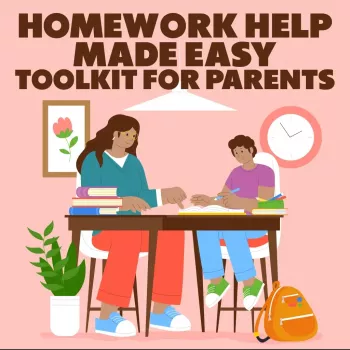
If you want an easy entry-style product example, a printable toolkit can work well as a first “sellable asset,” especially if your audience is parents: Homework Help Made Easy Toolkit for Parents – Printable Guide for Creating Study Habits, Homework Strategies & Independent Learning.
Simple pricing that supports early traction
For a deeper overview of common models and how to think about willingness to pay, Stripe’s pricing strategies guide is a helpful primer.
Quick pricing map for early-stage side hustles
| Offer type | Best when | Typical price range | Notes |
|---|---|---|---|
| Paid discovery / audit | Unclear scope and high trust needed | $29–$199 | Use to learn objections and refine the package |
| Fixed package (productized service) | Repeatable delivery and defined outcome | $99–$1,500 | Simplest to sell; easiest to compare and decide |
| Digital template / guide | Problem is common and repeatable | $9–$79 | Great entry offer; upsell into a package or consult |
| Subscription / retainer | Ongoing help required and recurring value | $49–$500+/mo | Start only after a repeatable monthly process exists |
A simple sales funnel that doesn’t require a big audience
If you’re unsure what “good enough” looks like, Y Combinator’s library has practical guidance on MVP thinking and getting early users: Y Combinator — Advice for early-stage startups.
First customer tactics that work with limited time
Monetization milestones and what to fix when it stalls
FAQ
What is an MVP for a side hustle?
An MVP is the smallest deliverable that produces a real result and can be sold now—like a paid audit, a template pack, or a single defined service package. The point is to learn from real customers quickly, then improve what sells.
How much should a new side hustle charge at the beginning?
Many new side hustles start with clear package pricing in ranges like $9–$79 for digital downloads, $29–$199 for audits, and $99–$1,500 for fixed packages. Use 1–3 tiers and adjust based on conversion rate and how long delivery actually takes.
How do you get your first customers without ads?
Start with warm outreach and introductions, participate in communities where your buyers already gather, and offer a small set of beta slots to earn feedback and proof. A simple weekly cadence of outreach, conversations, and follow-ups is often enough to land the first few sales.











Leave a comment