Modern Etiquette Micro-Course: Texting, RSVPs & Social Media
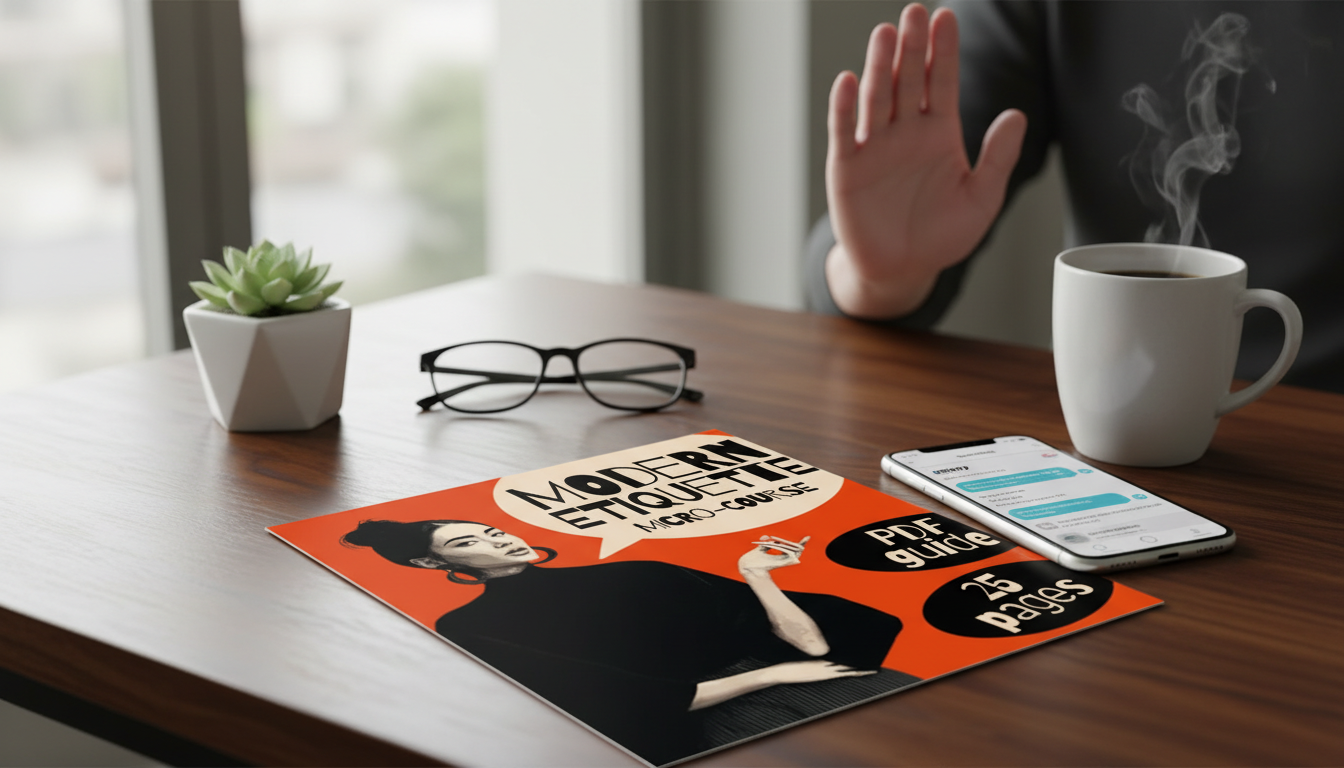
Etiquette today is less about memorizing rules and more about making other people feel considered—especially in fast, message-driven life. This micro-course turns common awkward moments into clear, doable choices, with a printable guide that fits real schedules and real relationships.
What “modern etiquette” actually means now
Modern etiquette is practical: it’s the skill of reducing friction, protecting time, and communicating with care. Instead of aiming for “perfect manners,” aim for clarity, kindness, and good timing.
- Prioritize clarity over formality. A direct, warm message beats a polished one that’s confusing or late.
- Pick the least confusing channel. Quick updates belong in text; sensitive topics often need a call; detailed logistics are usually better in email.
- Assume good intent—then set boundaries if needed. It’s fine to step back when messages become disrespectful or overwhelming.
- Match effort to context. The same words can land differently with a coworker, close friend, neighbor, service professional, or new acquaintance.
For a deeper look at how etiquette evolves with culture and context, the Emily Post Institute offers a helpful modern perspective grounded in respect and consideration.
Texting etiquette that prevents misunderstandings
Texting is efficient, but it’s also an easy place for tone and timing to go sideways. The goal is to make your message easy to understand and easy to answer.
- Lead with the point when time matters. Put the ask or purpose in the first line so the other person doesn’t have to hunt for it.
- Respect response windows. If something is urgent, say so and provide context—avoid vague “call me” messages that spike anxiety.
- Move heavy topics off rapid-fire texts. When emotions or nuance are high, switch to a call or voice note for fewer misreads.
- Group chats: keep it useful. Keep logistics in-thread, avoid side jokes that exclude others, and limit @-pings unless necessary.
- Use tone helpers sparingly. A short acknowledgment can help (“Got it—thanks”), but sarcasm is risky without facial cues.
| Situation | Better approach | Example message |
|---|---|---|
| Running late | Give an updated ETA and a next step | “I’m running about 10 minutes late—ETA 6:40. Do you want me to grab your order when I arrive?” |
| Need a reply | Add a deadline and make it easy to answer | “Could you confirm by 3 PM if Friday works? Yes/no is perfect.” |
| Sensitive feedback | Ask to switch channels | “This is a little nuanced—can we do a quick call when you have 10 minutes?” |
| Accidental silence | Acknowledge and continue without over-apologizing | “Just seeing this—thanks for your patience. Here’s the update…” |
If your communication style spans texting, email, and workplace tools, Harvard Business Review’s communication guidance is a strong reference point for clear, respectful messaging in professional contexts.
Social media manners: thoughtful posting, tagging, and commenting
Social platforms blur public and private life, which is exactly why etiquette matters there. Small choices—asking, crediting, and staying in the right channel—prevent big discomfort later.
- Ask before posting photos of others in private settings (homes, kids, intimate events, or gatherings with guest lists).
- Make tagging “opt-in” for sensitive contexts, such as work events, health topics, dating, or travel plans.
- Don’t corner someone in public comments. If you need something (a favor, an answer, a correction), move it to DMs.
- Credit creators and friends when sharing their work; avoid cropping out watermarks or names.
- Disagree without personal attacks. Address ideas, not character—and disengage when the exchange turns unproductive.
For a broad look at how social media use continues to shape everyday interaction, see research from the Pew Research Center.
RSVPs and invitations: how to be the easy guest
Hosts plan around headcounts, timing, and budgets. The easiest guest is responsive, accurate, and considerate—without making things complicated.
- Reply as soon as plans are known. Use “maybe” only if the host explicitly allows it.
- Honor headcounts. Don’t add plus-ones, kids, or friends unless the invitation includes them.
- Share dietary needs briefly and early. One clear note beats a last-minute scramble.
- If a conflict comes up after you accept, notify promptly and keep the explanation simple and respectful.
- Say thank you within 24–48 hours. A follow-up note is a bonus, not a burden.
Everyday politeness that still matters (and feels natural)
Daily etiquette isn’t about “being proper.” It’s about making shared spaces and shared time smoother for everyone.
What’s inside the Modern Etiquette Micro-Course (printable + digital)
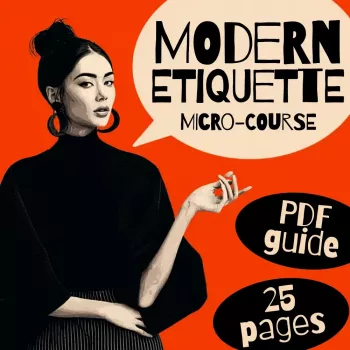
For anyone who wants clearer social confidence without sounding stiff, the Modern Etiquette Micro-Course | Printable Digital Etiquette Guide | Texting, Social Media, RSVPs & Everyday Politeness Tips is designed to be quick to learn and easy to use.
For households also building smoother routines and communication around school responsibilities, the Homework Help Made Easy Toolkit for Parents – Printable Guide for Creating Study Habits, Homework Strategies & Independent Learning pairs well as a practical companion for daily structure.
Simple practice plan: five minutes a day for two weeks
FAQ
How fast should someone respond to a text?
A reasonable window is a few hours for most everyday messages, and within 24 hours for non-urgent check-ins. If something is time-sensitive, label it clearly; if it’s truly urgent, a call is usually more appropriate than repeated texts.
Is it rude to leave a group chat on read?
Not always—informational messages (like “We’re seated” or “Here’s the address”) often don’t need a reply. If someone asks a direct question or shares emotional news, a quick acknowledgment helps, such as “Got it—thanks” or “Thinking of you; I’m here.”
What’s the most polite way to decline an invitation after initially saying yes?
Let the host know as soon as you can, keep it brief, and apologize for the inconvenience without overexplaining. If appropriate, a small make-good (a kind note or suggesting another time) can be thoughtful, as long as it’s realistic.










Leave a comment