Loop Detangling Brush: Gentler Wet & Dry Detangling
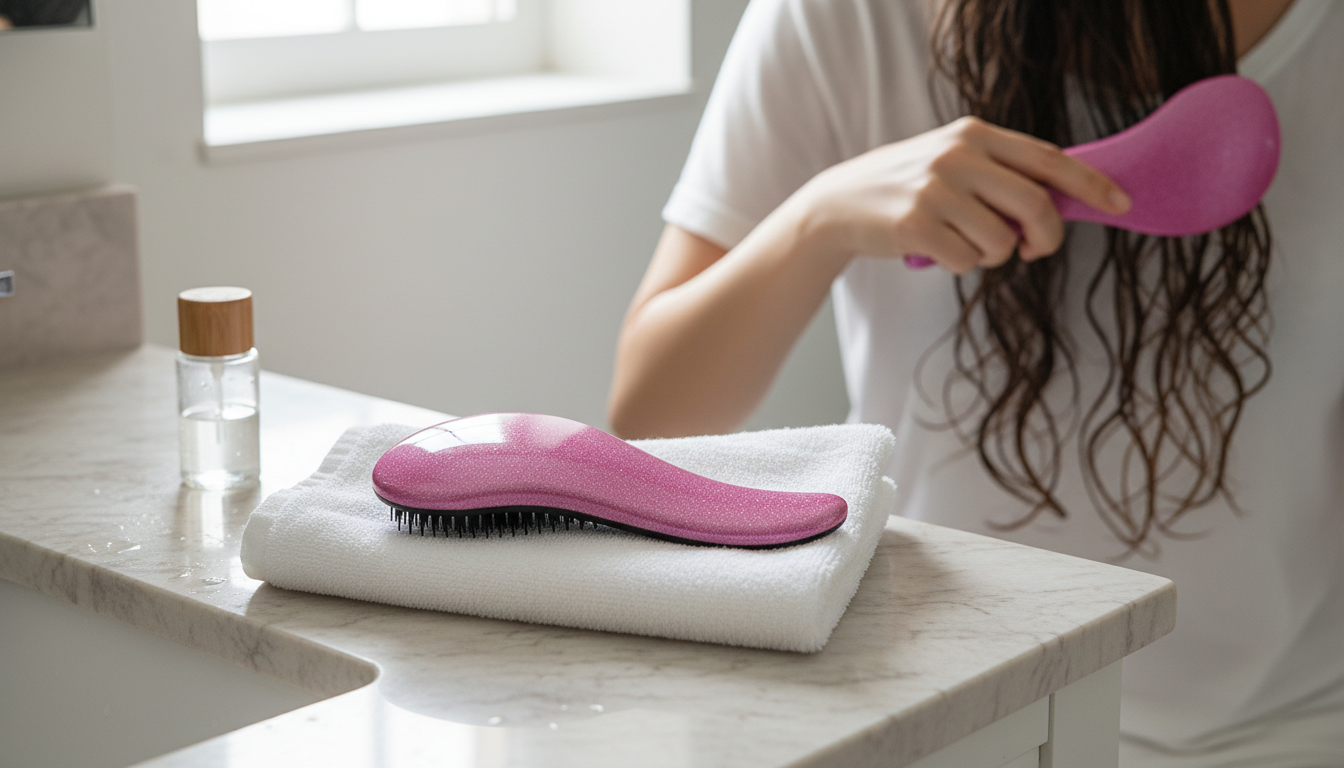
Tangles can mean breakage, pain, and lost curl definition—especially on wash days and protective-style take-downs. A loop-style detangling brush is designed to glide through knots with less snagging, making it a practical option for wet, dry, and natural textures when used with the right technique and enough slip.
What a loop detangling brush does differently
Unlike traditional brushes with rigid pins, a loop detangling brush uses flexible, looped bristles that help separate strands without the same sharp “catch points” that can yank and snap hair. The goal isn’t to force knots out—it’s to gently loosen shed hairs and tangles while keeping tension low.
- Looped bristles are shaped to separate strands while reducing sharp pulling compared with rigid pins.
- Works best when hair is sectioned and supported at the roots to limit tension on the scalp.
- Pairs well with conditioner, leave-in, or detangling spray to increase slip and reduce friction.
- Useful for wash day detangling, refresh days, and gentle smoothing before styling.
For a simple, everyday tool that fits this approach, see the Detangling Loop Hair Brush for Wet, Dry & Natural Hair.
Who it’s best for (and when to use it)
Loop detangling brushes can work across a wide range of textures, but the biggest difference comes from matching your technique to your hair’s needs (and detangling at the right time).
- Natural curls, coils, and kinks: Helps loosen shed hair and knots without flattening curl clumps as much as some fine-tooth tools.
- Wavy and straight hair: Supports quick, low-drag detangling after showering or before blow-drying.
- Kids and sensitive scalps: Can feel gentler when used with small sections and a light hand.
- Wigs, clip-ins, and extensions: Helps reduce snagging—avoid brushing close to wefts; hold the base of the hair piece while detangling.
For general hair-care fundamentals—like minimizing friction and being gentle around the scalp—see the American Academy of Dermatology Association’s guidance on hair care basics.
How to detangle wet hair with less breakage
Wet detangling tends to be easiest when hair is fully saturated and coated with a slippery product. Conditioner and water together create “glide,” which reduces friction—the main culprit behind snagging and snapping. If hair starts to feel grabby, add more water and product before doing more passes.
- Start with soaking-wet hair and conditioner; add water as needed to keep slip high.
- Divide hair into 4–8 sections; clip away what’s not being worked on.
- Hold hair near the roots for support; begin at the ends and work upward in short passes.
- If the brush stalls, stop and add more slip; finger-detangle the tight spot before brushing again.
- Rinse or style in the same sections to maintain curl grouping and reduce re-tangling.
| Step | What to do | Why it helps |
|---|---|---|
| 1 | Apply conditioner + a splash of water | Boosts slip and reduces friction |
| 2 | Section and clip | Prevents re-tangling and rushing |
| 3 | Support roots with one hand | Reduces scalp strain and breakage |
| 4 | Ends-to-roots detangle | Avoids tightening knots |
| 5 | Reapply product if snagging | Keeps hair pliable and minimizes snapping |
Breakage prevention comes down to gentler handling, less tension, and more lubrication—Cleveland Clinic also shares practical tips on how to prevent hair breakage that pair well with a low-drag detangling routine.
How to use it on dry hair without causing frizz
Dry brushing can be a mixed bag: for straight or loose wavy hair it may be simple and quick, while some curls and coils can puff up or lose definition. The workaround is to add a little moisture and limit passes—detangle enough to remove knots, then stop.
- Mist lightly with water or a detangling spray; dry brushing can raise cuticles and increase frizz for some textures.
- Use larger sections for loose waves/straight hair; use smaller sections for curls/coils.
- Use fewer passes; repeated brushing on dry curls can disrupt definition—switch to finger-detangling for stubborn knots.
- Finish with a small amount of oil or serum on ends if needed to reduce flyaways.
If you’re detangling to prep for a sleek finish, it can help to detangle first, then switch tools for shaping and smoothing—like the Straight Hair V-Comb Styling Brush for Smooth, Sleek Results.
Common mistakes that cause pulling (and easy fixes)
Most painful detangling sessions come from a few fixable habits. A loop brush can be gentler, but technique still matters—especially around the hairline and nape, where tangles are often tighter.
Care, cleaning, and keeping the brush performing well
Brush and styling options to pair with your routine
- For everyday detangling on wet, dry, and natural textures: Choose a loop detangling brush designed to glide through knots, like the Detangling Loop Hair Brush for Wet, Dry & Natural Hair.
- For shaping and lifting at the roots on natural styles: An afro styling comb can add volume and pick-out without over-brushing lengths—try the Afro Styling Comb for Natural Curly Hair & Real Hair Wigs.
- For smoothing and sleek finishes: A V-comb styling brush can help guide hair during styling and finishing steps, such as the Straight Hair V-Comb Styling Brush for Smooth, Sleek Results.
FAQ
Can a loop detangling brush be used on wet hair?
Yes—wet hair with conditioner or leave-in provides slip. Section hair, support the roots, and detangle from ends upward to reduce breakage.
Is it safe for natural curly hair and coils?
Generally yes when used gently with small sections and adequate slip. Avoid aggressive dry brushing if it causes frizz or disrupts curl clumps.
How often should the brush be cleaned?
Remove shed hair after each use, then wash weekly or whenever buildup appears so the loops keep gliding smoothly.











Leave a comment