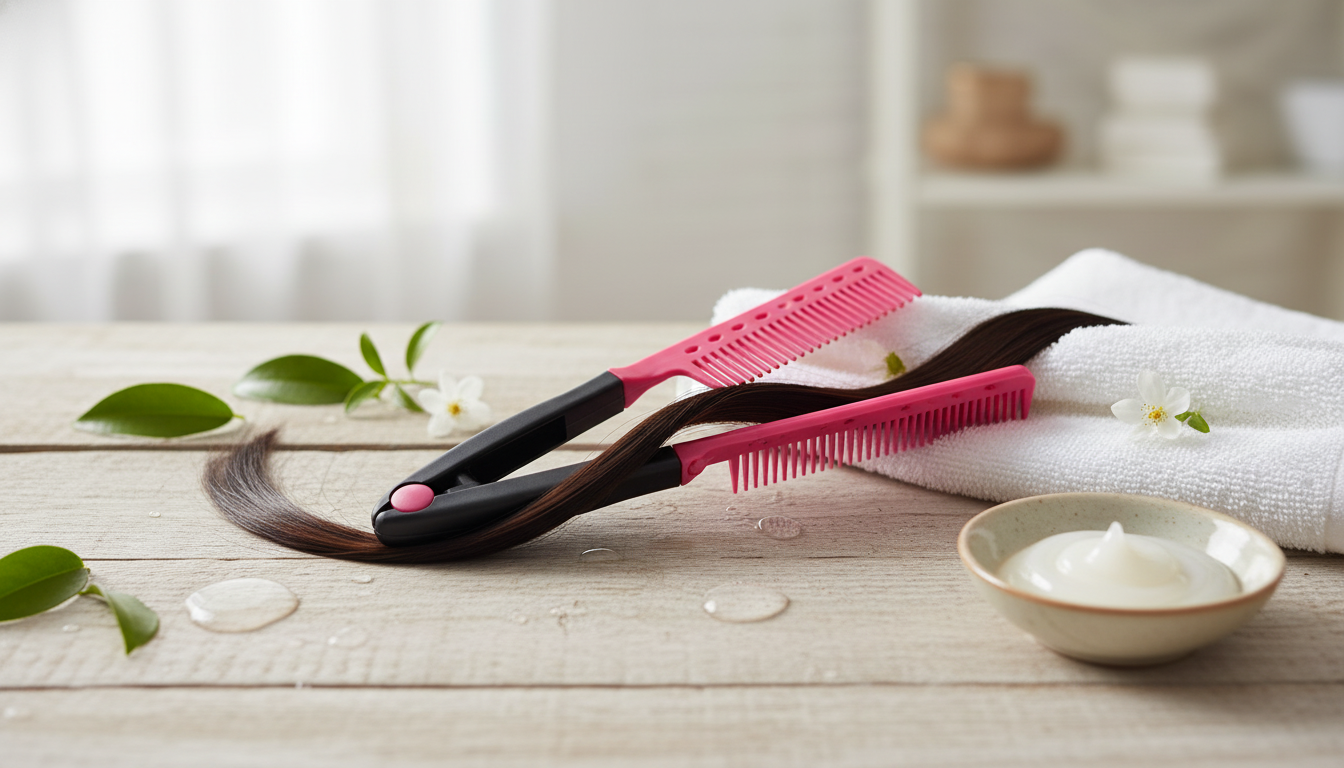
A sleek finish often comes down to control: even tension, consistent glide, and fewer snags while styling. A V-comb styling brush is designed to guide hair into a smoother lay, helping reduce flyaways and create cleaner sections for polishing lengths, shaping ends, or refining a ponytail. This guide covers what the V-comb design does, how to use it for a glossy look, and when to pair it with other combs for the fastest, neatest routine.
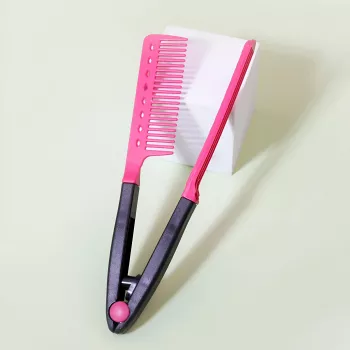
The “V” shape isn’t just a design detail—it changes how hair travels through the brush. As strands pass through the V channel, they’re encouraged into a more uniform path, which can make the surface layer look more aligned and reflective.
Think of a V-comb styling brush as a finishing and refining tool—great for the final 10% that makes hair look “done,” particularly when you want a tidy surface with fewer bumps.
If your hair is prone to breakage or scalp sensitivity, keep strokes gentle and prioritize a smooth glide. The American Academy of Dermatology shares practical daily hair-care basics that support healthier styling habits: https://www.aad.org/public/everyday-care/hair-scalp-care/hair.
A glossy finish comes from consistency: consistent section size, consistent direction, and a consistent (light) amount of product.
For frizz-prone hair, humidity and friction are common culprits. Cleveland Clinic offers helpful, practical guidance on reducing frizz day-to-day: https://health.clevelandclinic.org/how-to-get-rid-of-frizzy-hair/.
Different hair types benefit from slightly different technique. The goal is always the same: smoother alignment with minimal stress on the strand.
| Goal | Section size | Brush direction | Best finishing product |
|---|---|---|---|
| Sleek ponytail | Medium | Toward the elastic | Light hold gel or smoothing cream |
| Glossy lengths | Small to medium | Down the hair shaft | Lightweight serum |
| Reduce flyaways | Medium | With the grain of the style | Flexible hold hairspray |
| Refine ends | Small | Downward with slight curve | Leave-in conditioner (very light) |
If you use any smoothing treatments, be cautious with products that may release formaldehyde when heated. The FDA provides safety information here: https://www.fda.gov/cosmetics/cosmetic-products/hair-smoothing-products-release-formaldehyde.
Yes. By guiding the surface layer into a more uniform path with consistent, gentle tension, it can reduce the appearance of frizz and help flyaways lie flatter. For best results, use light strokes and a small amount of lightweight finishing product to avoid buildup or static.
It can be, but be extra gentle—wet hair is more elastic and more likely to break if pulled. Use it on damp (not dripping) hair, start at the ends, and stop if you feel snagging; detangle first before trying to smooth.
Remove shed hair after each use, then wash the brush about every 1–2 weeks depending on how much product you use. A quick cleanse with mild soap and warm water, followed by thorough air-drying, helps maintain glide and performance.









Leave a comment