Smart Portable Tire Inflator for Car & Bike: Auto Stop
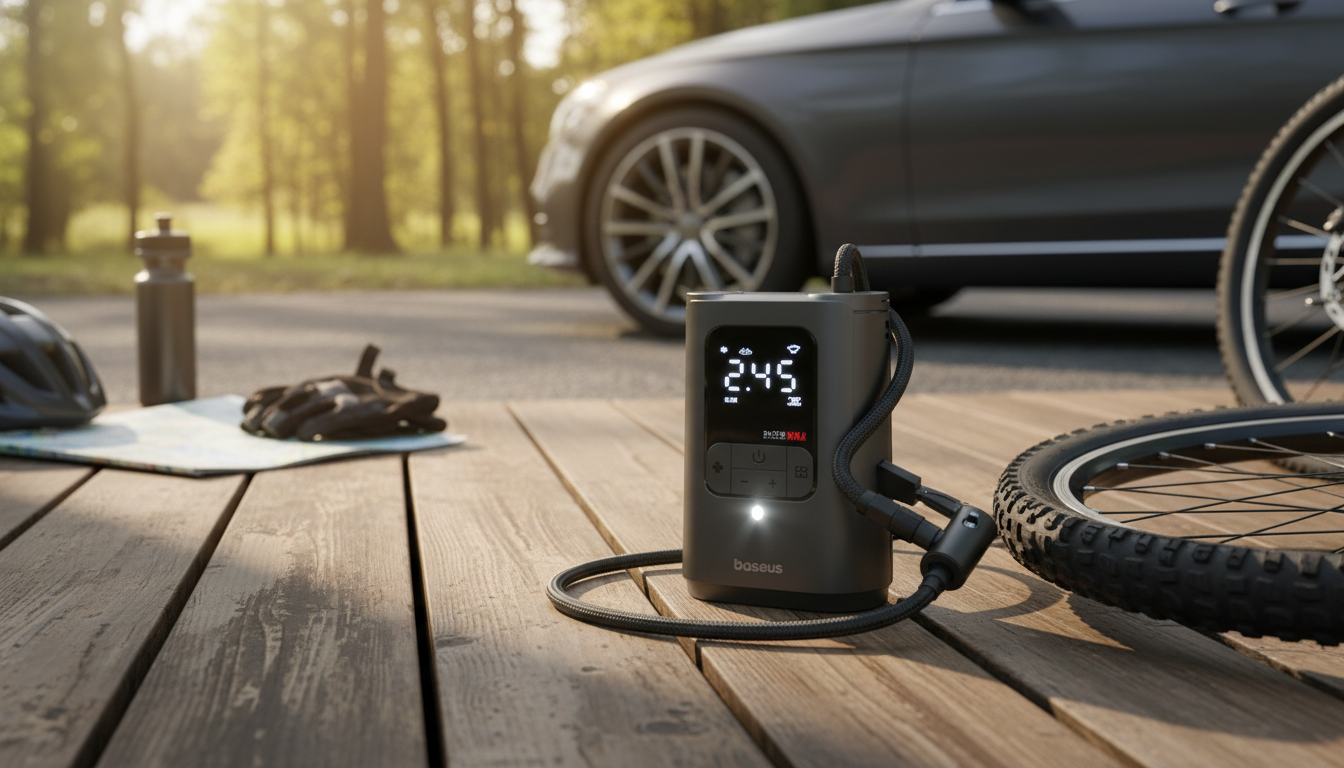
Portable Smart Tire Inflation for Cars and Bikes (Without the Guesswork)
Keeping tires properly inflated improves handling, braking, and tire life—and it helps avoid the hassle of hunting for an air pump at the worst moment. A portable smart inflator adds convenience with preset pressure, automatic shutoff, and a built-in LED light for roadside or nighttime use on cars, bikes, and other inflatables. If regular tire checks tend to slip down the to-do list, a compact inflator can make “monthly maintenance” feel closer to charging a phone than running an errand.
For a reliable, ready-to-store option, see the Portable Smart Car & Bike Tire Inflator with Auto Stop & LED Light.
What This Inflator Helps With Day to Day
- Quick car tire top-ups: Maintain the recommended pressure between service visits and seasonal temperature swings.
- Bike tire inflation before rides: Especially useful when you want a powered option for higher-pressure road tires (as supported by the unit’s rating).
- Emergency “get-to-safety” use: Add enough air to reach a safer spot or a service station when a tire is slowly losing pressure.
- Better visibility in the dark: The integrated LED light helps you locate the valve stem and stay visible on the roadside.
- More consistent results: Setting a target pressure with auto stop can reduce the “over/under” cycle common with manual pumps.
Underinflation can increase heat buildup and wear, while overinflation can reduce traction and ride comfort. For general tire safety guidance, the NHTSA overview is a helpful reference: NHTSA — Tire Safety.
Key Features That Make It “Smart”
- Auto stop: Set a target pressure and the inflator stops when it reaches that value to reduce over-inflation risk.
- Digital display: A clear readout helps you monitor pressure while filling and repeat the same target when topping up multiple tires.
- Portable form factor: Easier to store in a trunk, glove box, or bike bag than a full-size compressor.
- LED light: Useful for roadside checks, low-light garages, and quicker valve alignment.
- Multi-use support: Designed for car and bike tires; may also work for other inflatables with the right attachments.
Portable inflators shine for routine maintenance: topping up a few PSI, correcting a low tire warning, or getting a bike ready fast. They’re not a substitute for repairing a puncture or addressing wheel damage, but they can buy time and peace of mind.
Using Auto Stop Safely and Accurately
1) Start with the correct target pressure
- Cars: Use the driver-door placard (or owner’s manual). That spec is tuned for the vehicle’s weight, suspension, and handling.
- Bikes: Follow tire and manufacturer guidance, then adjust based on rider weight, tire width, and terrain.
2) Inflate when tires are cool (when possible)
Driving heats up tires and can temporarily raise pressure readings. If you must inflate right after driving, treat the number as a warm reading and recheck later when tires are cool for a more consistent baseline. Michelin’s guide is a solid primer: Michelin — Tire Pressure Basics.
3) Get a tight seal at the valve
- Attach the nozzle firmly to reduce leaks; a loose connection can cause slow filling and inaccurate readings.
- Keep the hose straight and avoid tugging on the valve stem, especially on bike tubes.
4) Let auto stop finish, then confirm once
- Set the target pressure, start inflation, and let auto stop complete the fill.
- After it stops, recheck once more. A quick confirm step helps catch minor loss during disconnect.
Car vs. Bike Inflation Tips
Car tires: small changes make a big difference
- Check monthly and before long trips: It’s one of the easiest ways to support predictable braking and handling.
- Follow the placard: Inflate to the vehicle specification for balanced wear and ride quality.
- Match side-to-side: Even pressure across an axle helps the vehicle track and respond consistently.
Bike tires: pressure is a performance setting
Valve types and adapters matter
Feature Checklist and Quick Comparison
| Item | Why it matters | What to verify before buying/using |
|---|---|---|
| Auto stop | Helps prevent overshooting the target pressure | Target pressure is easy to set and it stops consistently at the set point |
| Digital readout | Makes repeatable top-ups easier | Display is easy to read in daylight and at night |
| LED light | Improves visibility and safety at night | Brightness/angle works for valve access near the wheel |
| Portability | Fits in car or bike storage | Dimensions/weight match where it will be stored |
| Attachments | Supports different valve types/inflatables | Includes adapters needed for your tires and gear |
Care, Storage, and Roadside Readiness
Shop In-Stock Essentials
- Portable Smart Car & Bike Tire Inflator with Auto Stop & LED Light — a compact, everyday option for topping up car and bike tires with preset pressure and automatic shutoff.
- Homework Help Made Easy Toolkit for Parents – Printable Guide for Creating Study Habits, Homework Strategies & Independent Learning — a practical printable resource for building more consistent study routines at home.
FAQ
Does auto stop prevent over-inflation completely?
Auto stop greatly reduces the risk, but it still depends on setting the correct target pressure and using a secure connection. Warm tires, small air losses at the nozzle, or normal calibration variance can affect the final reading, so a quick recheck after filling is a good habit.
Should car tire pressure be set to the number on the tire sidewall?
No. For cars, the correct target is the vehicle’s door-jamb placard (or owner’s manual), which is the manufacturer’s recommended operating pressure. The tire sidewall number is typically the maximum pressure rating for the tire, not the everyday setting.
Can one portable inflator work for both car and bike tires?
Yes, many portable inflators can handle both as long as the unit supports the needed pressure range and you have the correct valve compatibility (Schrader and, for many bikes, a Presta adapter). Confirm your bike’s valve type and keep any adapters with the inflator.








Leave a comment