Calm Your Mind: Anxiety Relief Guided Meditation Audio
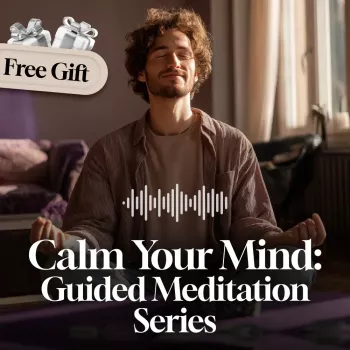
Calm Your Mind: A Guided Meditation Audio Series for Anxiety Relief
Calm Your Mind is an audio-based guided meditation series designed to help settle anxious thoughts, release tension, and build a steady daily practice. With simple, spoken guidance, the course supports calming the nervous system and creating space between stressful triggers and automatic reactions—without requiring prior meditation experience.
Guided meditation can be a practical, repeatable way to train attention and regulate stress. Research and clinical overviews commonly note benefits for stress management and emotional well-being when mindfulness-style practices are used consistently. For a deeper look at the evidence and safety considerations, see resources from the American Psychological Association and the National Center for Complementary and Integrative Health.
What this audio course helps with
- Eases racing thoughts by anchoring attention in breath, body sensations, and sound
- Supports stress recovery after work, social overload, or difficult news cycles
- Helps create a consistent wind-down routine for evenings and sleep transitions
- Builds practical skills: noticing worry loops, returning attention, and relaxing muscular tension
- Fits short windows of time, making it easier to practice during busy days
Instead of trying to “erase” anxiety, guided sessions teach a more doable skill: noticing what’s happening and gently shifting your next breath, posture, and focus. Over time, that micro-shift can help reduce the intensity and duration of spirals—especially when practiced before stress peaks.
What’s included in Calm Your Mind
- Guided audio sessions focused on calming attention and reducing anxiety intensity
- A structured progression that encourages repetition and gradual skill-building
- Clear cues to help maintain focus even when the mind feels busy
- A flexible format that works for morning grounding, midday reset, or nighttime decompression
Quick view of how to use the series
| When to listen | Session focus | Suggested duration | Best for |
|---|---|---|---|
| Morning | Grounding and intention-setting | 5–10 minutes | Starting the day with less mental noise |
| Midday | Stress reset and body relaxation | 5–15 minutes | Interrupting overwhelm and tension |
| Evening | Unwinding and letting go of rumination | 10–20 minutes | Transitioning out of work mode |
| Bedtime | Settling the nervous system | 10–20 minutes | Falling asleep more easily |
Who this series is a good fit for
- Beginners who prefer a calm voice guiding each step
- People who feel anxious but struggle to meditate in silence
- Anyone who wants an easy routine that doesn’t require special equipment
- Listeners who benefit from repeating the same practice to make it automatic
- Those looking for supportive tools alongside professional care (when needed)
This format is especially helpful if “just relax” advice has never worked. Spoken guidance gives your mind something simple to do: listen, exhale, notice, and return—without needing to figure it out alone.
How to get the most anxiety relief from guided meditation
- Choose one consistent time window (even 5 minutes) to reduce decision fatigue
- Use headphones when possible to make guidance easier to follow and reduce distractions
- Pair listening with a simple cue: same chair, same corner of the room, or a short stretch beforehand
- Practice “returning” instead of “perfect focus”: notice worry, label it gently, and come back to the guidance
- Track tiny wins (sleep latency, fewer spirals, faster recovery after stress) rather than “no anxiety at all”
If breathwork is part of your practice, slow exhalations can be a particularly effective lever for downshifting stress physiology. Harvard Health describes how breath control supports relaxation responses here: Relaxation techniques: Breath control helps quell errant stress response.
A simple weekly routine (repeatable and low-pressure)
- Days 1–2: Short sessions to establish familiarity and reduce resistance
- Days 3–4: Add a second listen when stress peaks (midday reset)
- Days 5–6: Try an evening session to reduce rumination and body tension
- Day 7: Choose the session that felt most calming and repeat it to strengthen the habit
- Keep the barrier low: consistency matters more than length
The most sustainable routine is the one that feels easy to restart. If you miss a day, treat the next listen as a reset—not a restart from scratch.
When meditation may feel harder—and what to do instead
- If anxiety spikes during quiet moments, start with shorter sessions and keep eyes open
- If restlessness is strong, try a seated posture with feet grounded or a gentle walking pace while listening
- If intrusive thoughts feel sticky, shift attention to physical anchors (hands, jaw, shoulders, breath at the nostrils)
- If emotions feel intense, focus on safety cues: slow exhale, relaxed face, and a wider field of attention
- If symptoms are severe or persistent, guided meditation can be supportive, but professional care can add essential tools
It’s also okay to modify the goal. Some days the win is simply listening through a short track and practicing one calm exhale at a time.
Price and practical value
Calm Your Mind: product details and where to get it
Product: Calm Your Mind: Guided Meditation Series | Audio Course | Anxiety Relief Meditation
Price: $28.99 (USD)
Availability: In stock
More in-stock tools that support calmer routines
- Homework Help Made Easy Toolkit for Parents – Printable Guide for Creating Study Habits, Homework Strategies & Independent Learning (helpful for building smoother after-school structure, which can reduce end-of-day stress)
FAQ
How often should guided meditation be used for anxiety relief?
Consistency usually matters more than session length. A practical target is 5–10 minutes daily (or 3–5 times per week), with optional short “reset” listens during high-stress moments.
Can guided meditation help with racing thoughts at night?
Yes—guided attention, body scanning, and longer exhales can reduce rumination and help your mind disengage from loops. Using the same evening or bedtime track repeatedly can also build a stronger association with winding down.
What if meditation makes anxiety feel worse at first?
That can happen, especially when quiet moments make sensations or thoughts more noticeable. Try shorter sessions, practice with eyes open, use physical anchors (feet, hands, jaw, shoulders), and seek professional support if symptoms feel intense or persistent.











Leave a comment