Calm Your Pet Around the Vacuum: Training That Works
Helping Pets Handle Vacuum Stress
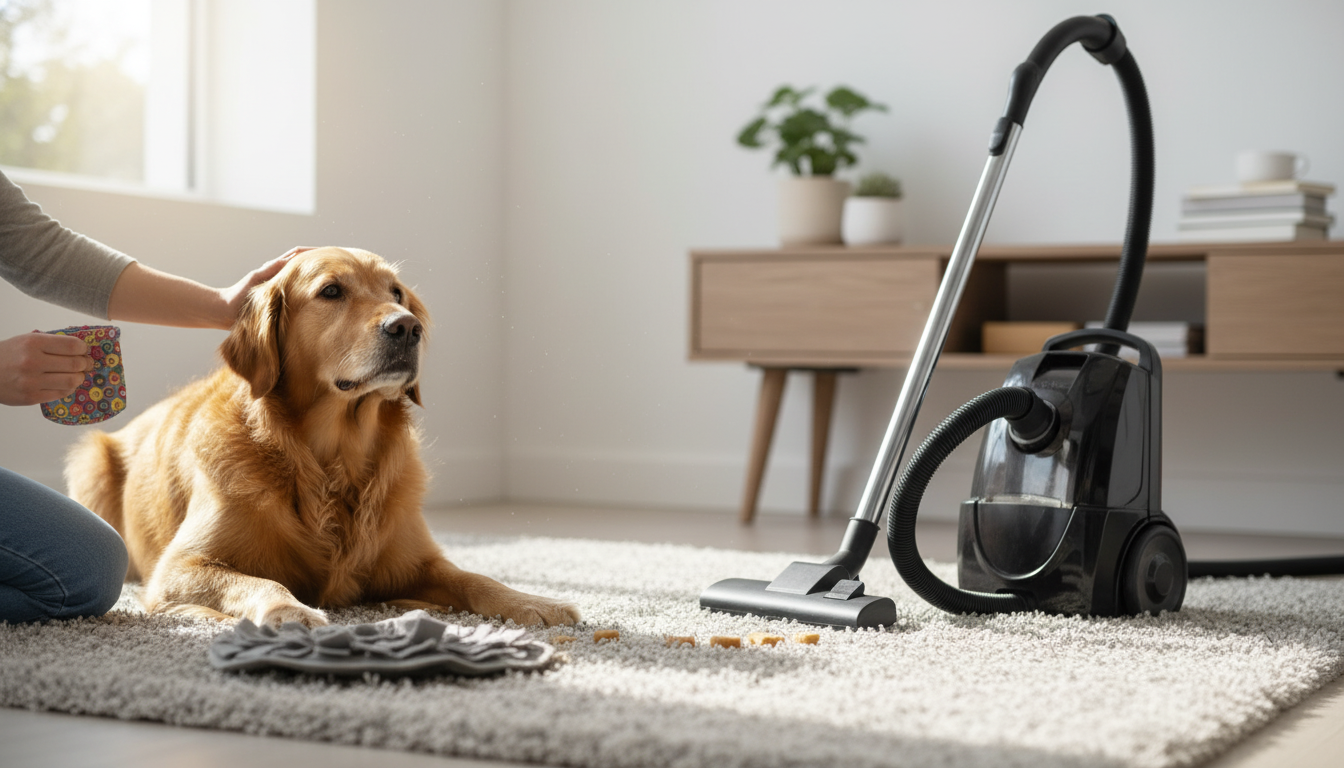
Many pets react to vacuums with barking, hiding, shaking, or attempts to chase and “attack” the machine. The loud sound, sudden movement, unfamiliar smell, and changing air currents can feel unpredictable and threatening. With a calm setup, gradual training, and a few environment tweaks, most pets can learn to stay relaxed—or at least feel safer—while floors get cleaned.
Why vacuums feel overwhelming to pets
Vacuum anxiety usually isn’t “stubbornness.” It’s a normal response to something that feels intense and hard to predict.
- Noise and pitch: The motor sound can be uncomfortable for sensitive hearing, especially in smaller rooms where noise echoes.
- Unpredictable movement: The back-and-forth approach, sudden turns, and “looming” can trigger chase, guarding, or fear responses.
- Airflow and debris movement: The air currents can feel startling, particularly for pets that dislike wind, dust, or particles.
- Negative learning history: Slipping on hard floors, being bumped, or getting trapped in a room during vacuuming can create a lasting association.
- Different coping styles: Some pets use distance-increasing behaviors (hiding, growling). Others use distance-decreasing behaviors (lunging or biting the vacuum), which can look “bold” but is often fear plus arousal.
Stress signals to watch for before vacuum day escalates
Catching stress early prevents rehearsing panic and makes training safer. Common signs include:
- Early signs: lip licking, yawning, pinned ears, whale eye, sudden stillness, panting when not hot.
- Moderate stress: pacing, trembling, hiding, refusing food, barking/whining, dilated pupils.
- High stress: snapping, biting at the vacuum, attempting to bolt, destructive scratching at doors, urinating/defecating from fear.
If high-stress signs appear, prioritize management and safety first, then train in shorter, easier steps. For general guidance on stress and safety, the American Veterinary Medical Association (AVMA) and the ASPCA’s overview on fear and anxiety are helpful starting points.
Set up the environment for success (management first)
Management reduces fear while you build new habits. Think of it as setting the stage so your pet can succeed.
- Create a “safe zone”: Use a quiet room or covered crate with comfy bedding, water, and a long-lasting chew or food puzzle.
- Buffer the sound: Close doors, block the door gap with a towel, and run a fan or white noise in the safe zone.
- Separate pet and vacuum path: Baby gates or closed doors prevent chasing and reduce risk of bites or injuries.
- Vacuum in short sessions: Five to ten minutes with breaks is often easier than one long, noisy event.
- Choose timing wisely: Clean after exercise, sniff walks, or play—when your pet is naturally calmer.
A gradual plan to teach calm around the vacuum
The goal is to change what the vacuum predicts. Instead of “noise equals danger,” you’re building “vacuum stuff equals good things,” while keeping your pet below their fear threshold.
Example 7-step desensitization ladder
| Step | Vacuum setup | Pet goal | Reinforcement |
|---|---|---|---|
| 1 | Vacuum off, stationary, in another room | Eats treats, loose body language | Treats delivered away from vacuum |
| 2 | Vacuum off, visible at a distance | Looks at vacuum then back to handler | Treat for calm check-ins |
| 3 | Vacuum off, moved slightly (no sound) | Stays relaxed while it moves | Treats for calm; stop before tension |
| 4 | Vacuum on for 1 second in another room | No panic; recovers quickly | Treats start immediately after sound |
| 5 | Vacuum on for 2–3 seconds, farther away | Maintains loose posture | Treats during/after; pause to reset |
| 6 | Vacuum on, slow movement at distance | Can settle on mat or in safe zone | Reward calm settling |
| 7 | Normal vacuuming pattern | Chooses safe zone or relaxed presence | Intermittent rewards; end early if stress rises |
Tools and routines that reduce stress on cleaning days
Common mistakes that slow progress
When to involve a veterinarian or behavior professional
Get additional help if your pet panics, tries to bite people during vacuuming, stops eating, or can’t recover for hours afterward. A veterinarian can rule out pain or hearing issues that worsen noise sensitivity. For training support, a qualified behavior professional can build a tailored plan; the International Association of Animal Behavior Consultants (IAABC) directory can help you find a consultant.
A practical option for guided support
If a structured plan and clear checkpoints would make training easier to stick with, Helping Pets Handle Vacuum Stress offers step-by-step guidance for management, gradual exposure, and calmer cleaning routines.
For households juggling training consistency across family members, a simple schedule and checklist can reduce mixed signals. The Homework Help Made Easy Toolkit for Parents – Printable Guide for Creating Study Habits, Homework Strategies & Independent Learning can also be repurposed for routine tracking (daily steps, short sessions, and progress notes), making it easier to keep everyone aligned.
FAQ
How long does it take for a pet to get used to the vacuum?
It can take anywhere from a few days to several weeks, depending on how intense the fear is and how consistently you practice while staying below threshold. Short, frequent sessions (1–3 minutes) and simple tracking of distance and comfort level usually speed progress.
Should a pet be allowed to chase or “attack” the vacuum?
No—chasing can reinforce high arousal and increases the risk of injury, bites, and equipment damage. Use gates or closed doors, send your pet to a “place,” and redirect to a chew or food puzzle in a safe zone.
What if treats do not work when the vacuum turns on?
Your pet is likely over threshold, meaning the fear is too strong to eat. Increase distance, try higher-value food, start with the vacuum off (or muffled from another room), and make sessions shorter; if progress stalls, involve a qualified professional.










Leave a comment