Build Emotional Strength for Preschoolers (Ages 3–5)
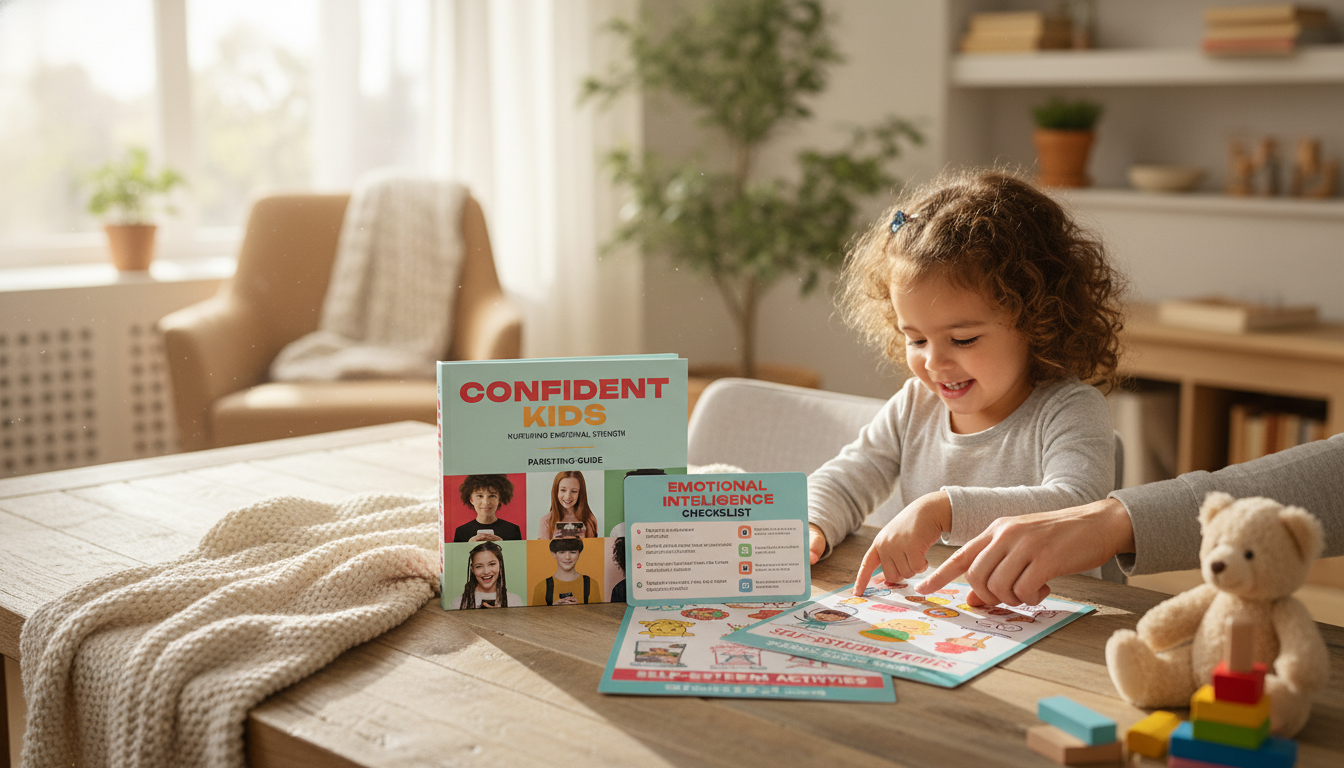
Confident Kids Bundle: Simple Tools to Build Emotional Strength Ages 3–5
Big feelings are normal in the preschool years—and so is learning what to do with them. The Confident Kids Bundle brings together a practical parenting guide, self-esteem activities for ages 3–5, and an emotional intelligence checklist to help children name emotions, practice calming skills, and grow confidence through everyday routines. Instead of waiting for the next meltdown to “teach the lesson,” this bundle helps build emotional skills during calm moments—so kids have something to reach for when frustration shows up.
What’s Included in the 3-in-1 Bundle
The bundle is designed for real family life: short attention spans, busy mornings, and repeat situations (leaving the playground, getting in the car, sharing toys). Inside, you’ll find:
- A parenting guide focused on nurturing emotional strength through consistent, supportive responses.
- Self-esteem activities designed for ages 3–5 that fit into short, play-based moments.
- An emotional intelligence checklist to track skills like recognizing feelings, empathy, and coping strategies.
- Tools that work well for home, preschool prep, and caregiver consistency across households.
If you’re looking for a structured set of resources you can reuse all year, explore Confident Kids Bundle: Nurturing Emotional Strength | 3-in-1 Bundle | Parenting Guide, Self-Esteem Activities Ages 3–5, Emotional Intelligence Checklist.
Why Emotional Strength Matters in Early Childhood
Between ages 3 and 5, children are learning how to manage intense emotions with a brain that’s still under construction. Building emotional strength early supports daily life now and creates a foundation for later self-regulation and learning.
- It helps children recognize and communicate needs instead of escalating into meltdowns.
- It supports early relationships by building empathy, sharing, and repair after conflict.
- It encourages persistence: children who can recover from frustration are more likely to keep trying.
- It strengthens routines (transitions, bedtime, leaving fun places) through predictable coping tools.
For additional parent-friendly guidance, the CDC’s Essentials for Parenting and the AAP’s positive parenting tips for preschoolers offer practical, research-aligned strategies.
How to Use the Bundle in a Weekly Rhythm
Preschoolers learn through repetition, not one big talk. A weekly rhythm keeps the plan simple: one focus skill, a short activity, and a tiny “look-for” on the checklist. The goal isn’t perfect behavior—it’s building a pathway the child can follow with support.
- Start with one focus skill for the week (for example, “naming feelings” or “calm body”) and repeat it across situations.
- Use a quick activity during a calm moment; practice skills before they’re needed.
- Pick one checklist item to observe daily and note small wins (even partial attempts count).
- Keep language consistent: choose a short phrase for each skill (example: “smell the flower, blow the candle” for breathing).
- Revisit the guide after tough days to troubleshoot triggers and adjust expectations.
Example weekly plan for ages 3–5
| Day | 5–10 minute activity | Checklist focus | Caregiver phrase |
|---|---|---|---|
| Mon | Feelings match (faces to feelings) | Names 2–3 emotions | “Tell the feeling.” |
| Tue | Calm-down corner setup (choose items) | Chooses a calming tool | “Pick a calm tool.” |
| Wed | Role-play: taking turns | Waits briefly with support | “My turn/your turn.” |
| Thu | Praise practice (effort-based) | Responds to encouragement | “You kept trying.” |
| Fri | Repair practice after conflict | Says sorry/tries again | “Let’s fix it.” |
| Sat | Gratitude or proud moment drawing | Shares a proud moment | “What are you proud of?” |
| Sun | Review wins + pick next skill | Recognizes progress | “Look how far you’ve come.” |
Self-Esteem Activities That Work Best for Ages 3–5
Preschool confidence grows from experiences that feel doable, repeatable, and noticed. For this age group, the most effective activities tend to be concrete and quick.
- Keep activities hands-on: pictures, simple choices, short role-play, and movement work better than long talks.
- Use process praise over trait labels (focus on effort, strategies, and persistence).
- Offer “brave practice” in tiny steps: try once, try with help, then try alone.
- Include autonomy boosters: let your child choose the order of tasks, select a calming tool, or pick a book to pair with a skill.
- Pair confidence building with boundaries: steady limits help kids feel safe enough to practice.
Emotional Intelligence Checklist: What to Track (and What to Ignore)
At ages 3–5, emotional regulation is uneven by nature. A checklist works best when it’s used like a progress snapshot, not a daily grade.
Many of these skills overlap with self-regulation and early executive function. Harvard’s Center on the Developing Child offers a helpful overview of how these abilities build over time: Executive Function & Self-Regulation.
Supporting Big Feelings Without Power Struggles
Who This Bundle Fits Best
Getting Started in 15 Minutes
For families who also want a simple structure for learning routines as kids grow, consider pairing it with Homework Help Made Easy Toolkit for Parents – Printable Guide for Creating Study Habits, Homework Strategies & Independent Learning to keep “skills practice” consistent beyond the preschool years.
FAQ
Is this bundle appropriate for both age 3 and age 5?
Yes. For 3-year-olds, keep steps shorter and rely on visuals and simple choices; for 5-year-olds, extend activities with more role-play and problem-solving. The checklist helps you adjust expectations and notice progress at each age.
How long does it take to see improvement in emotional regulation?
Small shifts often show up within a few weeks when skills are practiced consistently during calm moments. Look for progress as quicker recovery, more words, and increased willingness to try a coping tool—not perfect behavior.
What if a child refuses the activities or the calm-down tools?
Practice only when your child is calm, offer choices, and keep it under 10 minutes. Modeling the tools yourself (breathing, taking a sip of water, using the calm corner) can lower pressure and make the routine feel familiar.











Leave a comment